


Every sitcom bedroom has one. That slightly too-full chest of drawers standing against the wall, usually with a lamp on top and a mirror leaning against it, quietly holding everything the script never mentions — the character's whole offscreen life folded into six drawers. And in real homes, it works exactly the same way: no piece of furniture absorbs more of the ordinary chaos of daily life, and does it with less credit, than the humble chest of drawers.
Even Monica Geller — famously the tidiest woman in Manhattan — needed one secret, chaotic storage space in her otherwise magazine-perfect apartment. Most of us just don't hide ours behind a locked closet door; ours sits in plain sight, doing the same job in the open. Here's how to choose one properly, and how to make it look like more than just where the socks go.
What to Look for When Choosing a Chest of Drawers – Size, Material and Quality?
A chest of drawers earns its place through daily use, so the details that matter are mostly practical ones.
Drawer construction. Run your hand along a drawer before buying, if you can. Dovetail joints or solid runners with a soft-close or push-to-open mechanism last years longer than a simple glued box — and they're the difference between a drawer that glides shut quietly and one that rattles every time you close it, the way half the furniture in every 90s teen bedroom did.
Material and finish. Solid wood or high-quality oak veneer, like the caramel oak used across Pillovely's Kiyro collection, ages well and can be touched up rather than replaced. Fluted or slatted fronts — one of the most requested details right now — add texture without adding bulk, and read as considerably more expensive than a flat, plain front of the same size.
Depth relative to the room. A chest of drawers deeper than about 45 cm starts eating meaningfully into a bedroom or hallway; shallower models generally hold just as much, since chest of drawers storage tends to be about width and drawer count more than depth.
Number and size of drawers. Think about what's actually going inside before counting drawers. Two or three deep drawers suit folded jumpers and bedding; four or five shallower ones work better for anything you sort by type — the classic "socks, underwear, T-shirts" arrangement that's been the backbone of every bedroom dresser since long before Marie Kondo made folding a spectator sport.

Where to Use a Chest of Drawers – Bedroom, Living Room or Hallway?
A chest of drawers is one of the few pieces of furniture genuinely at home in three different rooms, each asking something slightly different of it.
In the bedroom, it's the classic. A chest of drawers here is functional first — clothes, accessories, the odds and ends every bedroom accumulates — but it's also usually the surface that ends up holding a lamp, a stack of books, and whatever small objects make a room feel lived-in rather than staged. Think of it as the quieter, more useful cousin of the nightstand.
In the living room, a modern chest of drawers takes on a different job entirely — closer to a sideboard, holding remote controls, board games, coasters and the occasional stack of records for anyone leaning into a vinyl revival. A piece like the 4-door sideboard from the FJORD collection works particularly well here, wide enough to anchor a whole wall while still keeping clutter behind closed doors.
In the hallway, a narrower chest of drawers becomes the family's unofficial command centre — keys, post, sunglasses, the one glove that's lost its pair. A compact option, like a Kiyro sideboard with shelves, fits neatly against a narrow wall without blocking the flow of people coming and going.
Wherever it lands, a chest of drawers bedroom or hallway placement usually reveals itself quickly — the room simply tells you where the clutter keeps collecting, and that's exactly where the drawers need to go.
How to Style a Chest of Drawers – Tips for a Balanced, Designer Vignette?
Knowing how to style a chest of drawers is really about restraint — most people either leave the top completely bare, which feels a little cold, or pile it with everything that didn't have another home, which is how you end up with the chaotic-junk-drawer-on-display look nobody's actually going for.
A simple, reliable approach to chest of drawers styling:
-
Anchor it with a mirror or a piece of art. Leaning a mirror against the wall behind it, the way you'd see in almost any well-shot film bedroom, instantly makes the whole vignette feel intentional rather than accidental.
-
Group objects in odd numbers. A lamp, a small stack of books, and one decorative object — a vase, a trinket dish, a framed photo — reads as considered. Four scattered items reads as clutter.
-
Vary the height. A tall lamp next to a low dish and a mid-height stack of books creates a natural visual rhythm across the top of the piece.
-
Let one object carry the nostalgia. A record sleeve propped up, a Polaroid tucked into the mirror frame, a well-loved paperback — this is where a little pop-culture personality belongs, the small detail that makes a chest of drawers feel like it's been part of your story rather than just delivered last week.
-
Use the drawers, not just the top, for personality. A lined top drawer for jewellery, or one drawer dedicated entirely to your own mixtape-era CD collection, keeps the sentimental clutter close without letting it take over the surface.
Decorating a chest of drawers well is less about following a formula and more about making sure every object earns its spot — the same instinct that made Rachel's apartment feel different from Monica's, even with roughly the same furniture budget.

Small Chest of Drawers vs Wide Chest of Drawers – Which Fits Your Space?
The choice between a small chest of drawers and a wide one usually comes down to one question: are you optimising for floor space, or for storage capacity?
A small chest of drawers — narrow, often no more than 60–80 cm wide — is the right call for studio flats, narrow hallways, teenage rooms, or any space where every centimetre against the wall is contested. It won't hold as much per piece, but it disappears into a small room far more gracefully than a bulkier alternative, and a compact option with fluted fronts or slim metal legs can still feel like a genuine design statement rather than an afterthought.
A wide chest of drawers, like the six-drawer Velia sideboard or a three-door Viola design, earns its footprint by consolidating storage that might otherwise be spread across two smaller pieces — genuinely useful in a shared bedroom, a family living room, or anywhere that needs to store more than one person's belongings in an organised, single spot.
As a rough guide: if you're furnishing a room under around 10 square metres, lean narrow. If the piece needs to double as a genuine storage solution for a whole household — closer to what a sideboard does in a dining room — go wide, and let it be the room's quiet centrepiece rather than something squeezed in as an afterthought.
Whether it ends up holding folded jumpers, a record collection, or the household's entire supply of takeaway menus, a good chest of drawers does its best work quietly — the way the best supporting characters usually do. Explore the full chests of drawers collection to find the width, finish and style that fits the role yours needs to play.
More storage and styling ideas are waiting at Pillovely — furniture with a little nostalgia built in, whatever decade your taste comes from.
Read next and shop the look
- Shop the look: bedroom furniture, bedside tables.
- Read next: Bedroom Ideas – How to Design a Modern Bedroom Step by Step and Small Bedroom Ideas.
Najnowsze artykuły

Kącik czytelniczy Pilla: Mark Millar, Steve Mcniven - "Wolverine - Staruszek Logan"
Wolverine – Staruszek Logan to komiks Marka Millara i Steve’a McNivena, który pokazuje najsłynniejszego mutanta Marvela w zupełnie nowym świetle. Postapokaliptyczny western, zmęczony życiem bohater i obietnica, której nie da się dotrzymać. Sprawdź, dlaczego ta historia o starym Loganie to jedna z najlepszych pozycji z Wolverine’em w roli głównej.
Czytaj więcejo Kącik czytelniczy Pilla: Mark Millar, Steve Mcniven - "Wolverine - Staruszek Logan"

Jak urządzić sypialnię na poddaszu? Praktyczny poradnik aranżacji skosów
Sypialnia na poddaszu to wnętrze z charakterem. Skosy, belki i okna dachowe tworzą klimat, którego trudno szukać w zwykłym pokoju w bloku. To jednak również przestrzeń wymagająca: niska ściana kolankowa ogranicza ustawienie mebli, a źle dobrane kolory potrafią sprawić, że pomieszczenie wydaje się ciasne. Dobrze zaplanowana sypialnia ze skosami może za to stać się najprzytulniejszym miejscem w całym domu – pod warunkiem, że zaczniesz od łóżka, potem dobierzesz niskie meble, a na końcu zadbasz o światło i tekstylia.
Czytaj więcejo Jak urządzić sypialnię na poddaszu? Praktyczny poradnik aranżacji skosów
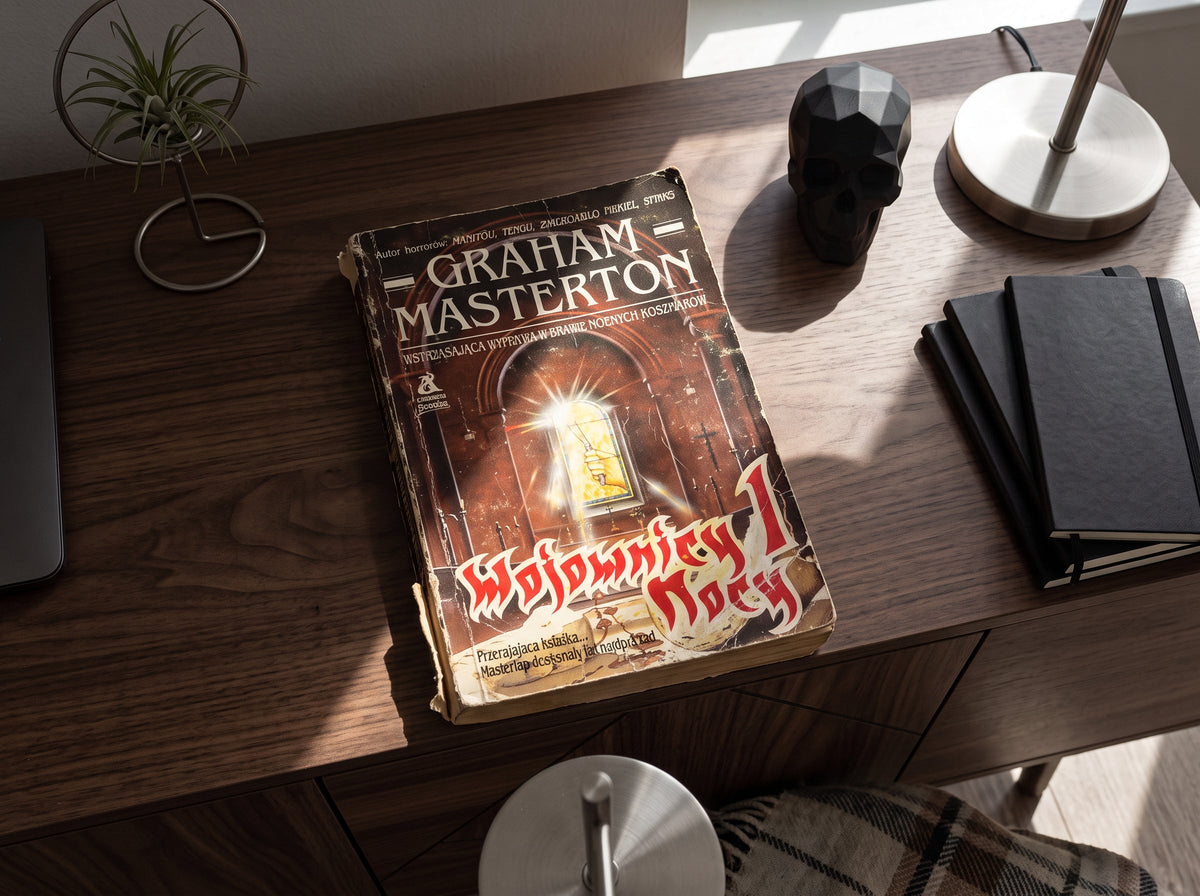
Kącik czytelniczy Pilla: Graham Masterton - "Cykl Wojownicy Nocy"
Wojownicy Nocy Grahama Mastertona to połączenie horroru, fantastyki i walki ze złem rozgrywającej się w świecie snów. Sprawdź, na czym polega ten nietypowy cykl i dlaczego po latach nadal dobrze się go czyta.
Czytaj więcejo Kącik czytelniczy Pilla: Graham Masterton - "Cykl Wojownicy Nocy"



Share:
Bedside Table Ideas – How to Choose and Style the Perfect Nightstand for Your Bedroom
TV Unit Ideas – How to Choose and Style the Perfect TV Stand for Your Living Room