


Wardrobe Ideas – How to Choose, Style and Organise the Perfect Bedroom Wardrobe
- Daniel Pawlik
There's a scene in almost every child's imagination – the moment they push through the coats in the back of a wardrobe expecting to find a snowy forest waiting on the other side. Narnia stayed with us for a reason. The wardrobe, in memory, was never just furniture. It was the biggest thing in the room, the thing that held all the mystery, the thing that creaked open with a satisfying weight and closed behind you with a soft thud.
Adult wardrobes are quieter about their drama, but they still shape a bedroom more than almost any other piece of furniture. Get the wardrobe right and the room breathes. Get it wrong and everything else has to work around it. Below, we walk through what types of wardrobes are worth knowing, how to make one work in a small bedroom, whether fitted or freestanding suits your home better, and how to style and organise the interior so it works as well every morning as it did the day it arrived.
The word "wardrobe" covers a broader family than most people realise. The main types worth knowing:
Single wardrobe. One door, one section. Fits between architectural features like a chimney breast or into an alcove. Ideal for a spare room or child's bedroom.
Double wardrobe. Two doors, split interior – typically half hanging space, half shelving. The workhorse of the bedroom furniture category.
Triple wardrobe. Three or more doors, wide format, generous internal division. Suits master bedrooms and rooms where wardrobe storage is doing the whole job.
Corner wardrobe. Fits an unused corner, converts an awkward angle into functional storage. Excellent in small or irregularly shaped rooms.
Walk-in wardrobe. A dedicated small room (or large closet) with hanging rails, shelves, and drawers. The dream for many households; realistic if you have the space.
Armoire. A traditional standalone piece, usually taller than wide, often ornate. Sits at the antique-to-classical end of the range.
By installation, wardrobes divide into fitted (built into the wall) and freestanding (movable furniture) – more on that decision below.
By door type, the choices are hinged (traditional, needs clearance to open) or sliding (space-saving, ideal for tight rooms). Sliding doors have become dominant in modern wardrobe designs because they don't demand extra floor clearance in front of the wardrobe.
Materials to look for:
Solid wood (oak, ash, walnut) – lasts decades, ages beautifully,
Engineered wood with veneer – cost-effective, stable across temperature changes,
Fabric-fronted panels – softer visual weight, warmer feel, less common but increasingly popular.

Small bedroom wardrobe ideas are all about maximising vertical space and choosing doors that don't demand clearance in front.
The rules for compact bedrooms:
Go tall, not wide. A 220 cm wardrobe uses the same footprint as a 180 cm one but gives you 22% more storage.
Choose sliding doors over hinged. You save 60–70 cm of walking clearance that a hinged door would demand.
Corner wardrobes over long walls. Turning an unused corner into storage frees a wall for a bed, desk, or dresser.
Mirrored doors. Serve as full-length dressing mirror and visually double the room's perceived size. A rare feature that helps twice.
Pale, matte finishes. Cream, oat, dusty pink, warm greige – they recede into the wall rather than dominating the room. Deep or glossy colours push the wardrobe forward.
Integrated handles or push-to-open fronts. Cleaner lines, no protruding hardware to catch on trousers or bedding.
A useful thought: in a genuinely small room, one substantial wardrobe often works better than two smaller ones plus a dresser. Fewer pieces of furniture, more actual storage.
For the everyday storage that a wardrobe doesn't solve – jumpers, gym gear, folded shirts – pairing it with a well-chosen Pillovely chest of drawers is more space-efficient than trying to add drawer units inside the wardrobe itself.
The fitted wardrobe versus freestanding wardrobe decision comes down to whether the bedroom is permanent enough to earn the investment.
Fitted wardrobes (built-in) win when:
you own the property or are staying long-term,
the room has unusual dimensions or sloped ceilings,
storage capacity is the primary priority,
you want a clean, integrated look with no gaps or lines between wardrobe and wall,
you're willing to spend more upfront.
Fitted wardrobes give you the maximum possible storage from any given footprint – no wasted space above, beside, or behind. The trade-off: significant upfront cost, longer installation, and no portability.
Freestanding wardrobes win when:
you rent, or plan to move in the next few years,
you want the flexibility to change the room layout later,
the room has straightforward walls and no awkward corners,
you prefer a specific piece of furniture as an aesthetic object,
you want a lower initial cost.
Freestanding wardrobes are also worth choosing when the wardrobe itself is part of the room's design story – a beautifully made walnut piece in a period property, an oak-fronted design that gives the room specific character.
A middle path worth considering: modular freestanding wardrobes that can be reconfigured or added to over time. You keep the flexibility of standalone furniture and gain some of the customisation of a fitted system.
Styling and organising a modern wardrobe well is a matter of routine as much as design.
The organisation basics that make a genuine difference:
Divide by category, not colour. Group tops together, trousers together, dresses together. It's how you actually reach for clothes.
One rail height per category. Shirts and jackets on the top rail, trousers on the middle, longer items on the lower – or a double-height configuration if you don't hang long dresses.
Front-face the most-used items. The clothes you wear weekly should be at eye level; occasional wear moves higher or lower.
Consistent hangers. Matching hangers – wooden, velvet, or slimline – make the wardrobe feel considered rather than chaotic.
Fold what shouldn't hang. Jumpers, denim, and t-shirts belong folded. Hanging them stretches the fabric over time.
For everyday styling coherence with the rest of the bedroom:
Match the wardrobe finish to at least one other piece – ideally the nightstands or dresser.
Repeat the wood tone somewhere else – a bench at the foot of the bed, a picture frame, a lamp base.
Keep the top of the wardrobe clean or use it deliberately with two or three carefully chosen objects (a stack of hatboxes, a large basket, one sculptural piece).
A well-organised bedroom rarely comes from the wardrobe alone. It comes from a rhythm of storage across several pieces – a wardrobe for hanging clothes, a chest of drawers for folded items and accessories, a nightstand for the everyday things (a book, a lamp, a phone charger), and, if you have space, a dressing table for getting ready in the morning. Each piece takes a role that the wardrobe alone would strain to fill.
For a fuller look at how these pieces work together across a bedroom, the Pillovely bedroom collection shows the ecosystem – beds, storage, dressing, and small pieces designed to sit under one design language.

What's the standard depth of a bedroom wardrobe?
60 cm allows garments to hang without touching the back panel. Anything less than 55 cm will crush shoulders on shirts and jackets.
Are fitted wardrobes worth the investment?
For long-term owners, usually yes. Fitted wardrobes typically add value to the property and maximise storage per square metre. For renters or short-term homes, freestanding is the sensible choice.
How high should a wardrobe be?
Standard heights range from 190 to 240 cm. Match to your ceiling – wardrobes that stop 10–15 cm below the ceiling look intentional; wardrobes that stop 40 cm below waste space.
Can I use a wardrobe instead of a chest of drawers?
Partly. Wardrobes with internal drawers handle folded clothes, but a dedicated chest of drawers gives you more accessible storage and adds a horizontal surface to the room. Most bedrooms benefit from both.
What are the best wardrobe finishes for a timeless look?
Warm wood tones (oak, walnut, ash), matte cream, and soft oat. These finishes flatter almost any bedroom palette and rarely date.
A well-chosen wardrobe does more than store clothes. It shapes the visual rhythm of the room, the way mornings begin, the way the space feels at the end of a long day. If you're building a bedroom that works – with storage, dressing, and rest all held under one considered aesthetic – the Pillovely bedroom collection is a warm place to start, with chests of drawers, nightstands, dressing tables, and beds designed to age together beautifully.
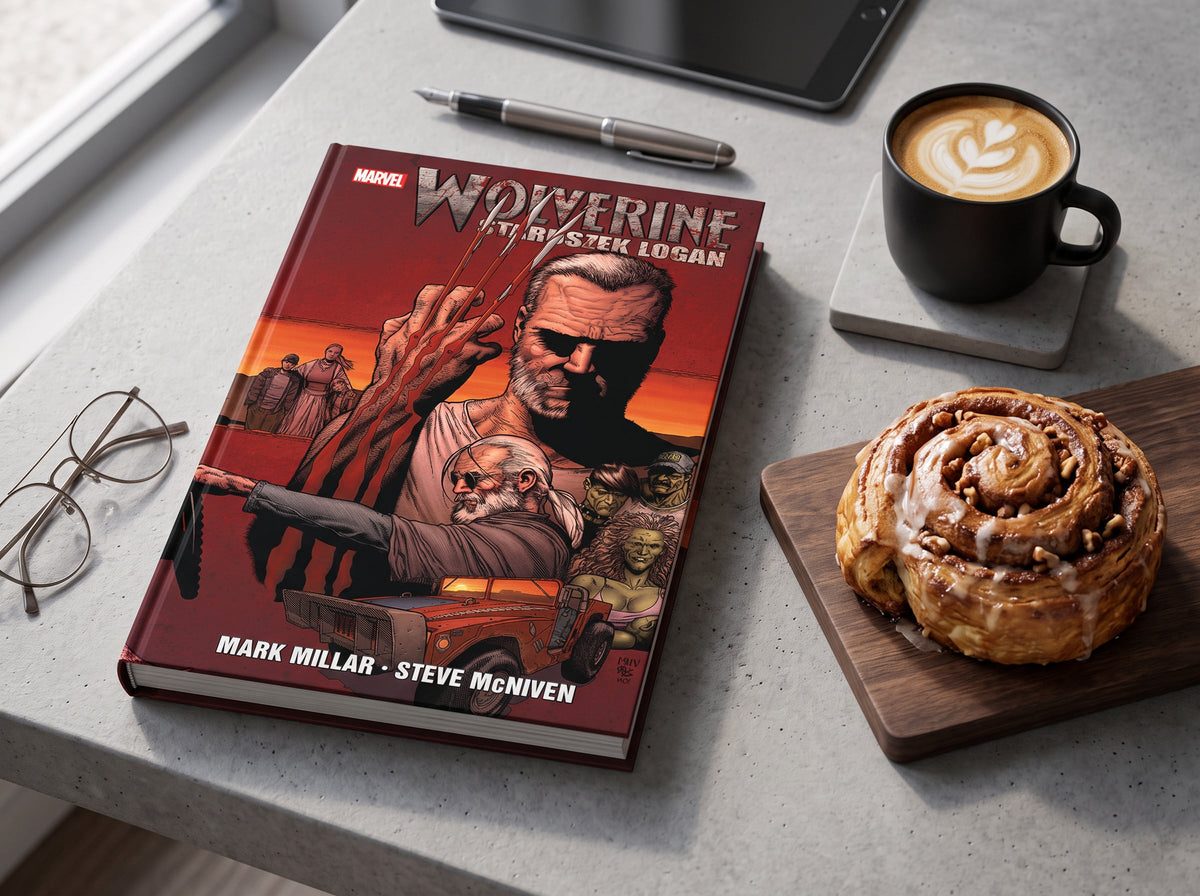
Kącik czytelniczy Pilla: Mark Millar, Steve Mcniven - "Wolverine - Staruszek Logan"
Wolverine – Staruszek Logan to komiks Marka Millara i Steve’a McNivena, który pokazuje najsłynniejszego mutanta Marvela w zupełnie nowym świetle. Postapokaliptyczny western, zmęczony życiem bohater i obietnica, której nie da się dotrzymać. Sprawdź, dlaczego ta historia o starym Loganie to jedna z najlepszych pozycji z Wolverine’em w roli głównej.
Czytaj więcejo Kącik czytelniczy Pilla: Mark Millar, Steve Mcniven - "Wolverine - Staruszek Logan"
Jak urządzić sypialnię na poddaszu? Praktyczny poradnik aranżacji skosów
Sypialnia na poddaszu to wnętrze z charakterem. Skosy, belki i okna dachowe tworzą klimat, którego trudno szukać w zwykłym pokoju w bloku. To jednak również przestrzeń wymagająca: niska ściana kolankowa ogranicza ustawienie mebli, a źle dobrane kolory potrafią sprawić, że pomieszczenie wydaje się ciasne. Dobrze zaplanowana sypialnia ze skosami może za to stać się najprzytulniejszym miejscem w całym domu – pod warunkiem, że zaczniesz od łóżka, potem dobierzesz niskie meble, a na końcu zadbasz o światło i tekstylia.
Czytaj więcejo Jak urządzić sypialnię na poddaszu? Praktyczny poradnik aranżacji skosów
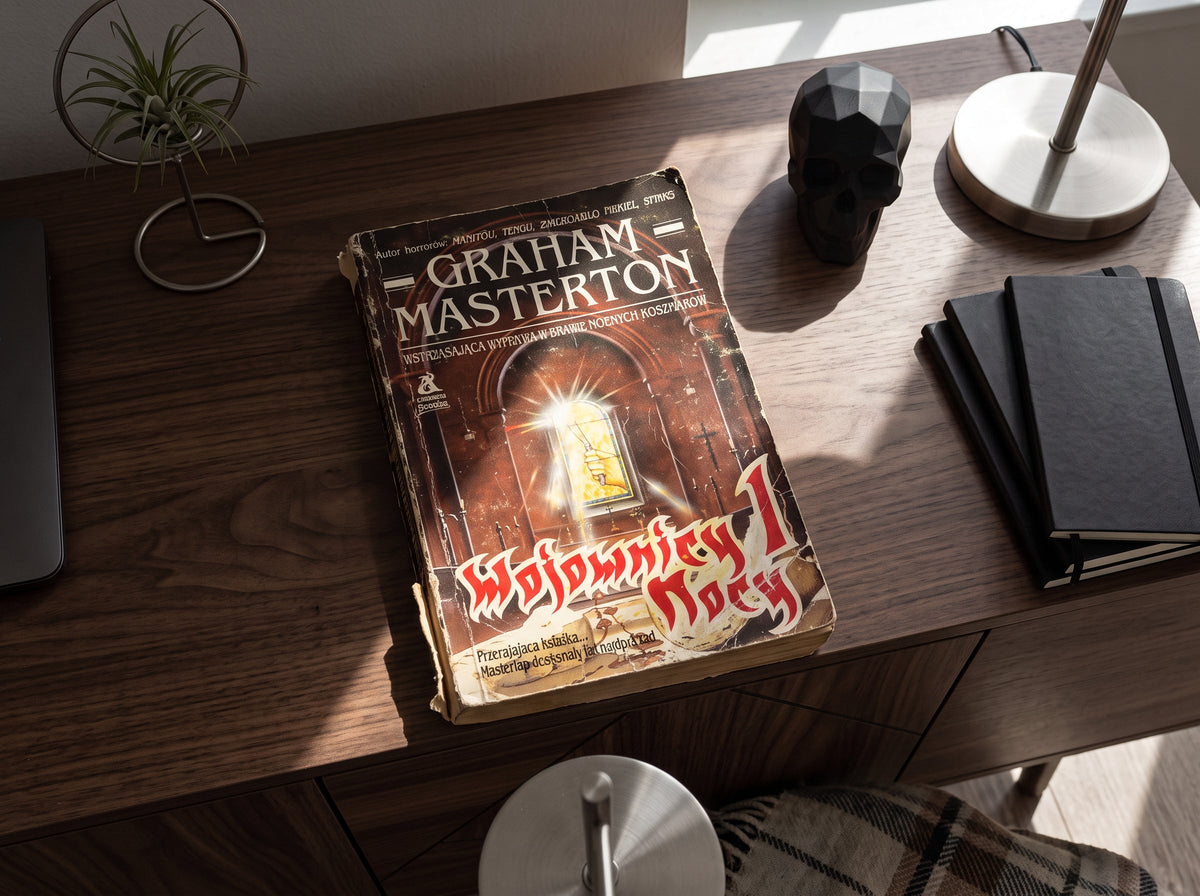
Kącik czytelniczy Pilla: Graham Masterton - "Cykl Wojownicy Nocy"
Wojownicy Nocy Grahama Mastertona to połączenie horroru, fantastyki i walki ze złem rozgrywającej się w świecie snów. Sprawdź, na czym polega ten nietypowy cykl i dlaczego po latach nadal dobrze się go czyta.
Czytaj więcejo Kącik czytelniczy Pilla: Graham Masterton - "Cykl Wojownicy Nocy"




Share:
Upholstered Bed – What Is It, How to Choose and What Makes It Different?
Dressing Table Ideas – How to Choose and Style the Perfect Vanity for Your Bedroom