


- Daniel Pawlik
Headboard Ideas – How to Choose the Perfect Headboard to Elevate Your Bedroom
- Daniel Pawlik
Take away everything else in a bedroom — the nightstands, the rug, the lamp you keep meaning to replace — and one piece still tells you almost everything about the room's character: what's standing behind the pillows. A headboard is the closest thing a bedroom has to a backdrop, the surface your eye lands on every single morning before it lands on anything else. Get it right, and the whole room feels finished even on the days the bed isn't perfectly made.
Here's how to choose one that actually earns that role.
Before diving into fabrics and shapes, it helps to know the three broad families most headboards fall into.
Upholstered headboards are padded and covered in fabric — the most popular choice by a wide margin right now, and for good reason. They soften the hardest-working wall in the bedroom, genuinely improve comfort for anyone who reads or watches something propped up against pillows, and come in an enormous range of shapes, from gently rounded to sharply geometric.
Wooden headboards bring warmth and a sense of permanence. A solid or veneered wood headboard tends to suit natural, Scandinavian or Japandi bedrooms particularly well, and it ages gracefully in a way fabric can't quite match — it won't need reupholstering a decade from now.
Panelled headboards, whether wood-panelled or fabric-panelled in vertical or horizontal sections, sit somewhere between the two — structured and architectural, often the choice for a more classic or modern-classic bedroom that wants texture without full upholstery.
Among the types of headboards Pillovely works with, most fall into the upholstered category, but the detailing varies enormously — from the segmented, geometric panels of the Neria bed to the rounded, softly padded form of Glori.

Proportion is where most headboard choices go right or wrong, and it's worth getting the numbers roughly right before falling in love with a fabric.
Width should match the bed frame, not just the mattress. A headboard that's noticeably narrower than the bed looks like an afterthought; most standard headboards are cut to sit flush with or very slightly wider than the frame beneath them.
Height is a matter of taste, but a few guidelines help. A low headboard, sitting roughly 80–100 cm above the mattress, suits minimalist or Scandinavian bedrooms and keeps the visual weight of the room low and calm. A high headboard — 120 cm or more — makes more of a statement, works particularly well as a genuine focal point, and gives you proper back support for reading or working from bed, which is exactly the appeal of a design like PUFFRA's high, soft headboard.
Consider the ceiling height and bed placement. A tall headboard can overwhelm a room with low ceilings, while a low one can look slightly lost against a very high wall. If the bed sits beneath a window, keep the headboard height well below the sill so it doesn't compete with natural light.
Think about how you actually use the bed. If mornings involve coffee, a laptop or a book propped against the headboard, err toward the taller, more supportive end of the range — comfort here matters as much as looks.
This is where a headboard stops being purely functional and starts doing real design work for the room.
Bouclé and textured weaves bring a soft, tactile quality that photographs beautifully and feels even better against bare skin on a lazy morning — an easy way to add warmth without adding pattern.
Velvet remains the go-to for a headboard that wants to feel a little more elevated. It catches light in a way flat fabrics can't, and a deep jewel tone — bottle green, ink blue, burgundy — turns a headboard into the room's real focal point rather than a backdrop.
Quilted and vertically stitched fabric adds structure and a slightly more classic, tailored look. A design like STRATUS or Nerom's vertical stitching works particularly well in a modern-classic or elegant bedroom, where a completely smooth headboard might read as slightly flat.
Shape matters as much as fabric. A rounded, organic headboard softens a room full of straight lines and angular furniture, while a geometric, segmented design — like Neria's panelled headboard — adds a more architectural, contemporary edge. Neither is "correct"; the right shape is simply the one that answers the rest of the room.
Colour is where restraint usually wins. A neutral or muted headboard — sand, oat, dove grey, soft sage — tends to age far better than a strong trend colour, and it lets you change the rest of the room's palette over the years without ever needing to replace the bed itself.

A well-chosen headboard deserves to be treated like the centrepiece it is, rather than something quietly hidden behind a stack of cushions.
Let it stand alone, at least partially. A headboard with genuine texture or an interesting shape doesn't need much competition — a couple of well-placed pillows against it is often more effective than piling on decorative cushions that hide the very thing you chose it for.
Frame it with symmetry. A matching pair of nightstands and lamps either side of the bed draws the eye straight to the headboard as the room's centre, the same instinct that makes a fireplace or a piece of art feel like a focal point elsewhere in the home.
Use wall colour to either match or contrast. Painting the wall behind the bed in a tone close to the headboard creates a soft, cocooning effect; a contrasting wall colour makes the headboard pop forward as a clear statement piece. Both work — it's a question of whether you want calm or drama.
Add texture around it, not on top of it. A woven wall hanging just above the headboard, a pair of simple wall lights flanking it, or even leaving the wall bare and letting the headboard's own shape do the talking — all of these let the headboard remain the star rather than getting lost in decoration.
Let the headboard set the tone for the rest of the room. Once you've chosen its fabric, shape and colour, the easiest path to a cohesive bedroom is pulling one element — a cushion, a throw, a rug border — in a matching or complementary shade, rather than trying to coordinate everything from scratch.
A headboard is one of the few pieces of furniture that works quietly every single day, whether you're aware of it or not — the last thing you lean back against at night and the first thing you see each morning. Explore the full upholstered beds collection to find the height, shape and fabric that will genuinely elevate your bedroom.
More bedroom inspiration is waiting at Pillovely — furniture designed around the small, quiet moments that start and end every day.
Kącik czytelniczy Pilla: Mark Millar, Steve Mcniven - "Wolverine - Staruszek Logan"
Wolverine – Staruszek Logan to komiks Marka Millara i Steve’a McNivena, który pokazuje najsłynniejszego mutanta Marvela w zupełnie nowym świetle. Postapokaliptyczny western, zmęczony życiem bohater i obietnica, której nie da się dotrzymać. Sprawdź, dlaczego ta historia o starym Loganie to jedna z najlepszych pozycji z Wolverine’em w roli głównej.
Czytaj więcejo Kącik czytelniczy Pilla: Mark Millar, Steve Mcniven - "Wolverine - Staruszek Logan"
Jak urządzić sypialnię na poddaszu? Praktyczny poradnik aranżacji skosów
Sypialnia na poddaszu to wnętrze z charakterem. Skosy, belki i okna dachowe tworzą klimat, którego trudno szukać w zwykłym pokoju w bloku. To jednak również przestrzeń wymagająca: niska ściana kolankowa ogranicza ustawienie mebli, a źle dobrane kolory potrafią sprawić, że pomieszczenie wydaje się ciasne. Dobrze zaplanowana sypialnia ze skosami może za to stać się najprzytulniejszym miejscem w całym domu – pod warunkiem, że zaczniesz od łóżka, potem dobierzesz niskie meble, a na końcu zadbasz o światło i tekstylia.
Czytaj więcejo Jak urządzić sypialnię na poddaszu? Praktyczny poradnik aranżacji skosów
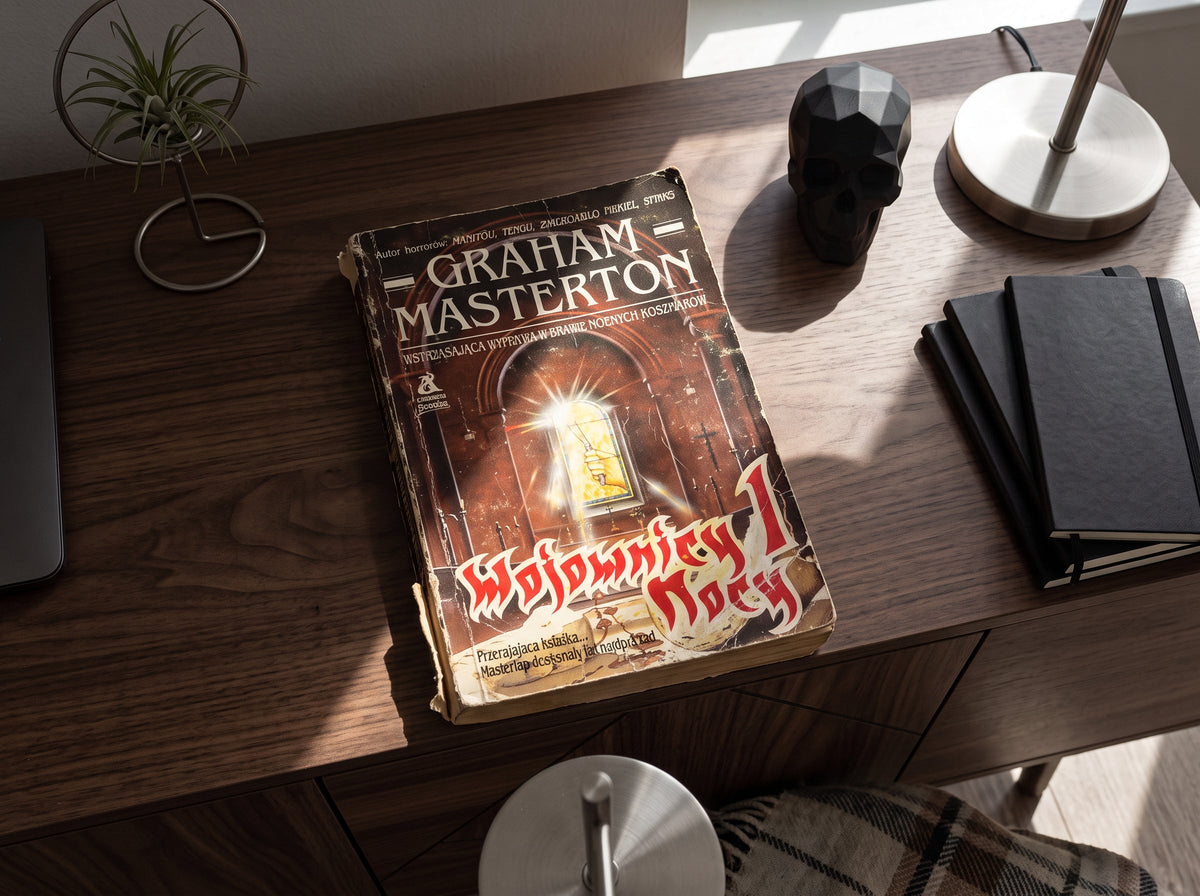
Kącik czytelniczy Pilla: Graham Masterton - "Cykl Wojownicy Nocy"
Wojownicy Nocy Grahama Mastertona to połączenie horroru, fantastyki i walki ze złem rozgrywającej się w świecie snów. Sprawdź, na czym polega ten nietypowy cykl i dlaczego po latach nadal dobrze się go czyta.
Czytaj więcejo Kącik czytelniczy Pilla: Graham Masterton - "Cykl Wojownicy Nocy"





Share:
Open Plan Kitchen Living Room Ideas – How to Design and Zone the Space
Accent Chair – How to Choose and Style a Statement Chair for Your Living Room