


- Daniel Pawlik
Dining Chair Seat Height – How to Choose the Right Chair Dimensions for Comfort
- Daniel Pawlik
There is a kind of evening you cannot plan. It starts with dinner and ends long after midnight – plates long empty, coffee gone cold, and you are all still sitting at the table because the conversation will not end. Menus and playlists do not create moments like that. Comfort does. And comfort at the table starts with one surprisingly mundane measurement: seat height. It decides whether you stay for another hour or start fidgeting after twenty minutes. At Pillovely we take this detail seriously, because good furniture should make room for life, not get in its way. So let's look at how to choose the right chair dimensions – clearly, without ergonomic jargon.
First, two terms that are often confused. Chair height describes the whole piece – measured from the floor to the highest point of the backrest. Seat height is the distance from the floor to the surface you sit on. It is this second measurement that is responsible for most of your everyday comfort, even though product descriptions often treat it as an afterthought.
What does ergonomics say? The most comfortable dining chair seat height is usually 45–47 cm. In this range most adults can rest their feet flat on the floor with their knees at roughly a right angle – the body relaxes and circulation is not restricted. A seat that is too high leaves your feet dangling and your legs going numb; too low pushes your knees up and invites slouching. That is why a good chair gets its seat height right first. Then come seat depth (around 40–45 cm) and width – because even the perfect height will not work if the seat is too cramped.

Standard chair height is the result of decades of observing how we actually sit. For a classic dining chair, the seat height is around 45–47 cm – a figure that works in nine out of ten homes. But a home has more than one zone, so one number is not enough.
In a study or home office, adjustability rules. Here the seat height should follow you and the desk, which is why good swivel chairs have a height-adjustment lever. In the living room the rules reverse: armchairs and sofas have lower seats, around 40–43 cm, because they are for lounging rather than an active posture. If you want a chair that combines office practicality with home comfort, take a look at our Ondris swivel chairs.
And here is the most important truth of this article: there is no single perfect chair height for everyone. There is a height that is right for you – your height, your habits and the way you live.
A chair never works alone – it always performs as a duet with the table, and their relationship decides how comfortable you are. The rule is simple: what counts is the difference between the seat height and the table top. A comfortable gap is 27–30 cm. It gives you room to slide your legs under the table and rest your elbows on the top without raising your shoulders.
Let's do the maths. A typical dining table is 74–76 cm high. Subtract a comfortable 27–30 cm and you get a seat height of roughly 45–48 cm – exactly the range above. This calculation is invaluable when you mix pieces from different places: a new table with chairs inherited from your parents (we love combinations like that). Check this one difference to avoid disappointment – sometimes two centimetres separate a pleasant dinner from an uncomfortable one.
Chairs with armrests are a separate case – they need to fit under the table top, so the overall chair dimensions matter, not just seat height. If you dream of enveloping, armchair-style dining chairs, see our Hikari Komfort chairs with armrests – with a soft, upholstered seat and a sturdy oak base. Find a matching table in our dining tables.
The seat material also completes the comfort that dimensions provide. An upholstered seat cushions and softens; a wooden seat is easier to keep clean and has a warm, slightly nostalgic character. We like to think about chairs long term – the right seat height means you are not straining the chair with an awkward posture, and solid construction lets it serve the next generation too.
Time for a practical cheat sheet. These are the chair dimensions really worth checking:
A final quick test, because numbers are not everything. Sit down and check three things: feet flat on the floor, thighs roughly parallel to the floor, and a few fingers' gap between the front edge of the seat and the back of your knees. If all three are right, the seat height suits you, whatever the label says. If you are looking for light wooden chairs in a Scandinavian spirit that are easy to move around, see the Krel chairs. The full range is in dining chairs, with inspiration for the whole eating area in our dining room collection.

What is the most comfortable seat height for a dining chair?
The most commonly recommended seat height is 45–47 cm. It lets you rest your feet flat on the floor and keep a natural posture.
How do I match chair height to my table?
Leave about 27–30 cm between the seat and the table top, so you can sit comfortably and slide your legs under the table.
Does the standard chair height suit everyone?
No. Height, build and personal preference all affect which height is most comfortable.
What seat depth should I choose?
Seats around 40–45 cm deep work best, supporting the thighs without pressing on the backs of the legs.
Do chairs with armrests need extra measurements?
Yes. As well as seat height, check the armrest height so the chair can slide under the table top.
How can I tell if a chair fits me?
Sit down and check that your feet are flat on the floor, your thighs are almost parallel to the floor and there is a small gap between your knees and the seat edge.
At Pillovely we believe the right chair is the quiet hero of the best evenings at home. When the seat height is just right, nobody is in a hurry to get up – conversation flows, laughter fills the room and an ordinary dinner becomes a memory. Before you decide, order fabric samples and feel the material for yourself.
Jak urządzić sypialnię na poddaszu? Praktyczny poradnik aranżacji skosów
Sypialnia na poddaszu to wnętrze z charakterem. Skosy, belki i okna dachowe tworzą klimat, którego trudno szukać w zwykłym pokoju w bloku. To jednak również przestrzeń wymagająca: niska ściana kolankowa ogranicza ustawienie mebli, a źle dobrane kolory potrafią sprawić, że pomieszczenie wydaje się ciasne. Dobrze zaplanowana sypialnia ze skosami może za to stać się najprzytulniejszym miejscem w całym domu – pod warunkiem, że zaczniesz od łóżka, potem dobierzesz niskie meble, a na końcu zadbasz o światło i tekstylia.
Czytaj więcejo Jak urządzić sypialnię na poddaszu? Praktyczny poradnik aranżacji skosów
Kącik czytelniczy Pilla: Graham Masterton - "Cykl Wojownicy Nocy"
Wojownicy Nocy Grahama Mastertona to połączenie horroru, fantastyki i walki ze złem rozgrywającej się w świecie snów. Sprawdź, na czym polega ten nietypowy cykl i dlaczego po latach nadal dobrze się go czyta.
Czytaj więcejo Kącik czytelniczy Pilla: Graham Masterton - "Cykl Wojownicy Nocy"
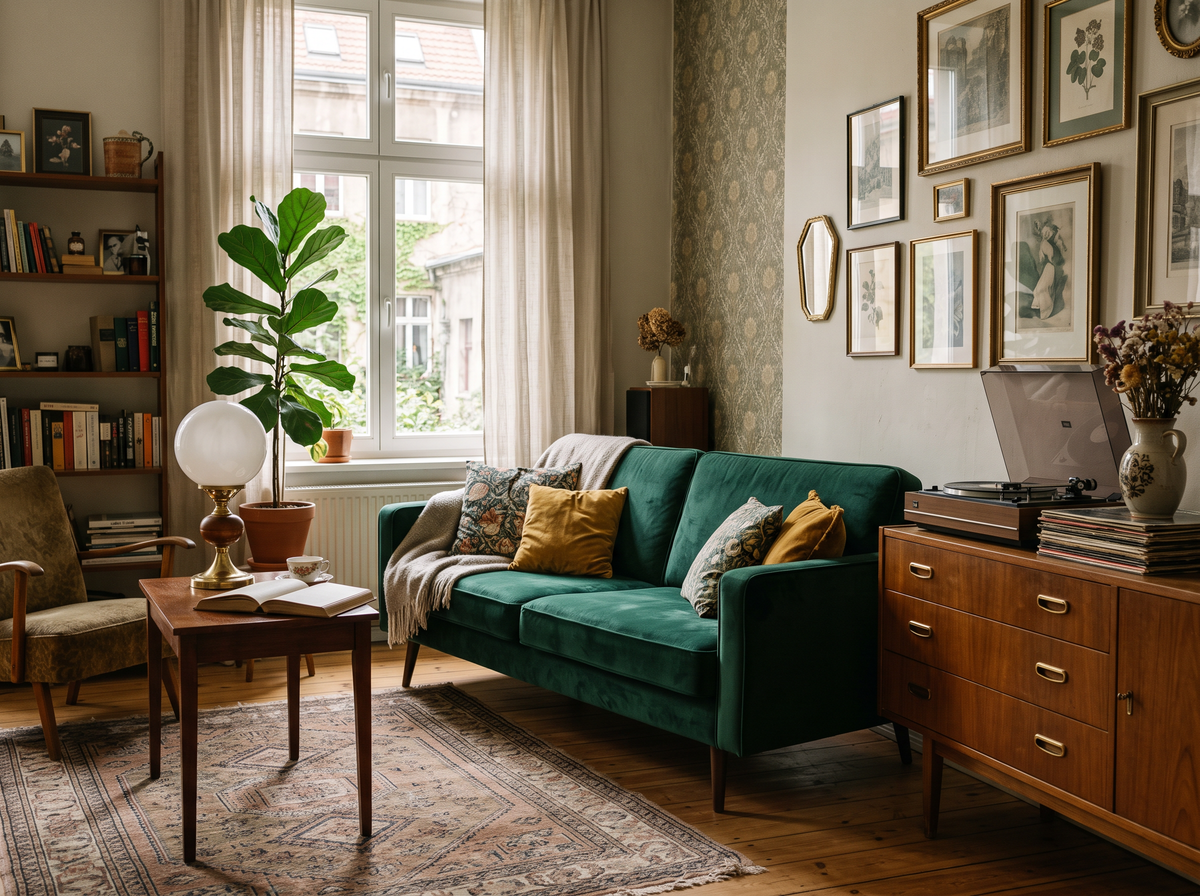
Styl vintage we wnętrzach - co to jest i jak urządzić mieszkanie z duszą retro?
Styl vintage we wnętrzach to sposób urządzania mieszkania, w którym ważne są historia, faktura, forma i świadome łączenie elementów z różnych dekad. Nie chodzi o stworzenie pokoju jak z muzeum ani o przypadkowe ustawienie starych mebli. Dobrze zaplanowany styl vintage pozwala połączyć meble z charakterem, miękkie tkaniny, drewno, szkło, ceramikę, metalowe detale i współczesną wygodę. Dzięki temu wnętrze wygląda naturalnie, ma własny rytm i nie sprawia wrażenia aranżacji złożonej z identycznych elementów.
Czytaj więcejo Styl vintage we wnętrzach - co to jest i jak urządzić mieszkanie z duszą retro?





Share:
Purple Living Room Decor – Elegant Ideas for a Stylish and Modern Interior
Navy and Yellow Living Room – Bright Yellow Accents for a Stylish and Modern Space