


- Damian Jerzy Zadora
The most common interior design mistakes and how to avoid them
- Damian Jerzy Zadora
Remember Rysiek's apartment from "Miodowe lata"? Or the Kiepski family's kitchen, where every inch screamed for a designer's help? Or perhaps your own student apartment, where a Nirvana poster sat next to a picture of the Virgin Mary, and the whole look was completed by a sofa found near a dumpster? These decorating blunders aren't just the domain of pop culture – we all have our youthful sins in our closets (or on the walls). At Pillovely, we believe that mistakes are the best teachers, so we've collected the biggest decorating blunders among Poles. Because "You are someone" – someone who can learn from others' mistakes instead of repeating them in your own home.
Remember those display cases full of crystal for every occasion? Glasses from your aunt's wedding, vases from your First Communion, figurines from Cepelia? Today, we make the same mistake with "Instagram shelfie"-style shelves – everything has to be out in the open, everything has to be visible. The result? Instead of a stylish interior, we have a museum of random objects.
The 70/30 rule – 70% of things hidden, 30% on display. It's like a good movie – you don't show all the special effects at once. Choose a few items that really mean something. The rest? Go to a cupboard, a box, maybe the attic. Remember: minimalism isn't about a lack of things; it's about consciously choosing what to show.
Seasonal rotation – like an art gallery. In spring, tulips in a vase, in autumn, candles, in winter, a centerpiece. You don't have to show your entire collection at once. It's like a playlist – 20 good songs are better than 200 random ones.

A Louis XV sofa (grandmother's), an industrial coffee table (because it was on sale), Scandinavian armchairs (because it's trendy), an oriental rug (a gift from my mother-in-law). Sound familiar? It's like a band playing a different song—maybe each one is good on its own, but together they're a cacophony.
Find a common denominator – color, material, era. If you like eclecticism, let it be deliberate. The rule of three – no more than three styles in one room. It's like "Kogel-mogel" – the chaos was intentional, and that's why it worked.
A neutral base, bold accents. The sofa and larger pieces in calm colors, and a touch of fun in accessories. It's easier to change a pillow than a couch when you tire of the tropical trend.
Poland's color trauma is real. After years of living among blue tiles and green paneling, the pendulum has swung the other way. Now everything is beige, gray, and white. Like a black-and-white film – artistic, but sometimes lacking life.
The 60-30-10 color rule: 60% dominant (neutral) color, 30% supporting color, 10% accent. It's like the Perfect song – "Nie płacz Ewka" was black and white, but red lips changed everything.
Start small – a colorful pillow, a picture, a vase. Afraid? Plants are a safe way to introduce color. Green always works, and when you get tired of it, you give it to a neighbor.

One ceiling lamp = one big mistake. It's like the lighting in "Pitbull" during the audition—harsh, unpleasant, revealing every imperfection. Or the other extreme—just lamps, candles, and the dim light of a movie theater.
At least three light sources in a room: general (ceiling), task (desk, reading), and ambient (decorative). It's like a theater – different lights for different scenes.
Dimmer is your friend. Bright in the morning for makeup, cozy in the evening for a TV show. An investment on par with a movie ticket, with an effect like a Wajda director's piece.
A small table next to a large sofa, like a Fiat next to a truck. Or, conversely, a large table in a small dining room, where squeezing sideways is the norm. It's like Zenek Martyniuk at the Philharmonic Hall – it may be cool, but it doesn't fit the space.
Measure, measure, measure. And not just the furniture, but also the walkways. At least 60 cm for free movement. It's not paranoia, it's planning.
The 2/3 rule – the rug should take up 2/3 of the space under the furniture, the painting 2/3 of the sofa's width. It's like the proportions in "Time of Honor" – everything was balanced, so it looked authentic.

Plaid, stripes, flowers, geometry – all in one room. It's like watching every episode of "L jak miłość" at once – too much stimulation.
One dominant pattern, the rest subdued. Or different patterns in the same color palette. Like a good band – every instrument is audible, but they play harmoniously.
The principle of scale – large pattern + medium + small. Never three of the same. It's like the cast of "Clan" – diversity, but within the framework of a single story.
Pictures hung haphazardly, at varying heights, randomly grouped. Or the other extreme – everything in a single line, like at a tax office.
Paper templates – cut out the shapes of the images from paper, tape them together. Rearrange them as you like, without making any holes in the wall. It's like a costume rehearsal for "Dancing with the Stars" – first the rehearsal, then the show.
The rule of center – either align to the center of the composition (57 inches from the floor is the museum standard) or align to the top/bottom edge. Chaos must be controlled, as with Bareja – apparent chaos, but everything is well thought out.

A brightly colored wall because "that's what they showed on the show." Furniture in an ultra-trendy shape that will be passé in a year. It's like Krawczyk's hairstyle from the '90s – once the height of fashion, now... well, exactly.
Trendy accessories, classic furniture. It's easier to change a leopard-print pillow than a sofa. Paint is the cheapest way to transform – if you get tired of it, repaint it.
Invest in quality basics – a good sofa, a sturdy table, a comfortable bed. Let trends be like spices – they add flavor, but they don't constitute the foundation of a dish.
Instagram says: more plants! The result? The living room resembles the greenhouse in Łazienki Park, only without the gardener. Half of it withered, half grew like the baobabs in "The Little Prince."
Start with tough plants: zamioculcas, sansevieria, pothos. They'll outlive anything, like a Nokia 3310. One large plant > ten small ones. The wow factor without the rainforest effect.
Grouping – three pots together look better than three separately. Different heights, similar pots. It's like a boy band – each different, but they fit together.

"It's a souvenir..." and suddenly the apartment is a museum of family heirlooms. Each piece of furniture has a story, but together they create a story of horror. It's like "The Ranch" – sentiment is nice, but it can't dominate the present.
The rule is one souvenir per person. Grandma's armchair – yes, but not the entire set. Choose what truly moves you, the rest – a photo as a keepsake, and bye-bye.
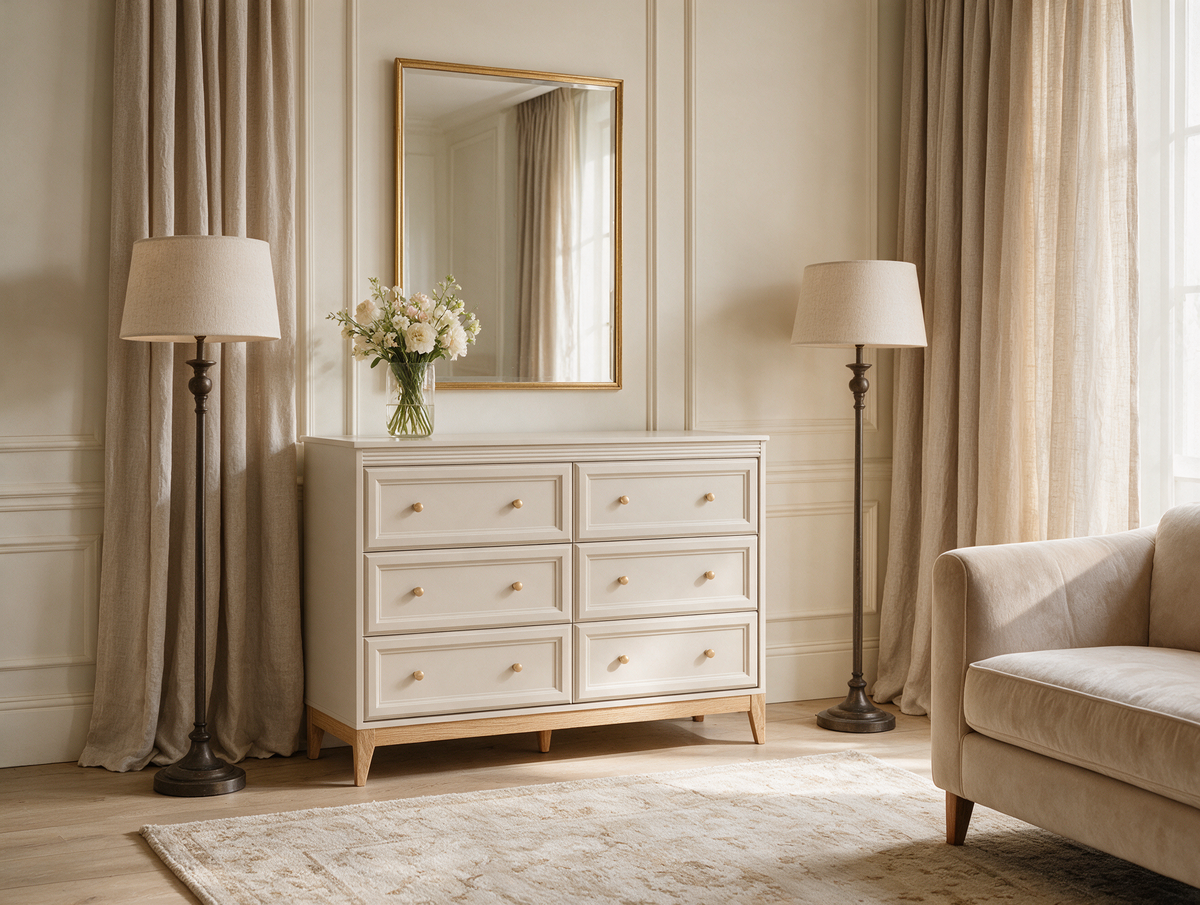
Refresh instead of throw away. Old dresser + new paint = vintage with character. Like a remix of a classic hit – respect for the original, but with a fresh twist.
Waiting for the "perfect moment," the "perfect budget," the "perfect inspiration." The result? Empty walls for five years because "we haven't found THAT painting yet."
Better is the enemy of good. Start somewhere—you can always change. A home isn't a museum, it's a place to live. As Kora sang: "You have time, use it, don't waste it."
Evolution, not revolution. One room at a time, one project a month. It's a marathon, not a sprint. Like "For Better or For Worse" – it takes years because it's done piece by piece.

The biggest mistake? Forgetting that your home should serve you, not the other way around. The most beautiful interior is one in which you feel truly yourself. Does that mean a Metallica poster next to an icon? If that's you, why not? A leopard-print couch? If it makes you happy, go for it.
Loving the warmth of home is loving a space that reflects you. Imperfect, a bit chaotic, but authentically yours. Like Polish reality – not always as beautiful as a catalog, but genuine and familiar.
Remember – every designer starts with mistakes. The difference between an amateur and a professional? A professional has already made every possible mistake and knows how to avoid them. You have an advantage – you can learn from ours.
And finally: the best design is the kind you don't notice—because it simply works. Like a good song—you don't analyze every chord, you just feel it's right. That's what we wish for you—homes that are simply right. Without mistakes? Impossible. But with mistakes that add character? That's art.
Styl klasyczny we wnętrzach – co to jest i jak urządzić elegancki, ponadczasowy dom?
Styl klasyczny to sposób urządzania wnętrz, który od dziesięcioleci nie wychodzi z mody. Opiera się na symetrii, harmonijnych proporcjach i szlachetnych materiałach, takich jak drewno, kamień czy miękkie tkaniny. Klasyczne wnętrze nie musi być jednak sztywne ani przypominać pałacowej sali – dobrze zaaranżowane jest przede wszystkim spokojne, wygodne i eleganckie. Liczy się w nim jakość, porządek i dbałość o detal, a nie przypadkowe dekoracje.
Czytaj więcejo Styl klasyczny we wnętrzach – co to jest i jak urządzić elegancki, ponadczasowy dom?
Kącik czytelniczy Pilla: Mark Millar, Steve Mcniven - "Wolverine - Staruszek Logan"
Wolverine – Staruszek Logan to komiks Marka Millara i Steve’a McNivena, który pokazuje najsłynniejszego mutanta Marvela w zupełnie nowym świetle. Postapokaliptyczny western, zmęczony życiem bohater i obietnica, której nie da się dotrzymać. Sprawdź, dlaczego ta historia o starym Loganie to jedna z najlepszych pozycji z Wolverine’em w roli głównej.
Czytaj więcejo Kącik czytelniczy Pilla: Mark Millar, Steve Mcniven - "Wolverine - Staruszek Logan"
Jak urządzić sypialnię na poddaszu? Praktyczny poradnik aranżacji skosów
Sypialnia na poddaszu to wnętrze z charakterem. Skosy, belki i okna dachowe tworzą klimat, którego trudno szukać w zwykłym pokoju w bloku. To jednak również przestrzeń wymagająca: niska ściana kolankowa ogranicza ustawienie mebli, a źle dobrane kolory potrafią sprawić, że pomieszczenie wydaje się ciasne. Dobrze zaplanowana sypialnia ze skosami może za to stać się najprzytulniejszym miejscem w całym domu – pod warunkiem, że zaczniesz od łóżka, potem dobierzesz niskie meble, a na końcu zadbasz o światło i tekstylia.
Czytaj więcejo Jak urządzić sypialnię na poddaszu? Praktyczny poradnik aranżacji skosów





Share:
Relaxation zone in the garden or on the terrace – furniture that will make it easier
Children's room - what furniture and accessories create a safe and cozy interior